
The rapid growth of online commerce has created very complex fulfillment operations for today’s e-commerce companies due to the significantly growing number of purchases being made online. Consequently, during busy periods, warehouses and distribution centers find it exceptionally difficult to maintain efficiencies. As a result of this inability to keep pace with the accelerated rate of orders being processed, customer experience quality is compromised due to the nature of delays in shipping and inventory inaccuracies caused by inefficient processing.
Not only are former customer service standards and reliability issues causing damage to the reputations of many e-commerce brands and businesses, but there has also been a noticeable increase in the expectations of consumers regarding delivery timeframes, as well as having easy access to order tracking systems and a positive experience throughout all post-purchase processes for every transaction.
While e-commerce has changed the way we shop, it has also created difficulties for e-commerce and warehouse business owners. Fulfillment specifically is one area that can make or break your business.
The increasing volumes are changing the expectations of fulfillment.
The growth and requirements of high-volume e-commerce.High volume e-commerce and the requirements. There are usually five areas where bottlenecks occur within the warehouse operation: receiving and put-away of inventory, order-picking accuracy, packing and label creation, carrier sortation, and returns processing. Picking is the most manpower-intensive process within the warehouse operations and tends to be the first process to fail under increasing volume pressures, especially when the warehouse utilizes paper pick lists. During peak demand periods, warehouse congestion is a big productivity inhibitor.
Fulfillment centres find that all packing stations, storage aisles, and dispatch zones are too congested during promotional campaigns and during the holiday shopping season. This, in turn, causes limitations of mobility for employees, which reduces picking precision and productivity.
Warehouse Congestion Slows Productivity During Peak Demand
Today’s warehouse management systems (WMS) offer live information about where items are and where they’re needed next, a fact that removes blind spots for bottlenecks to build up. The rise of automation in fulfilling orders is transforming the efficiency of the business. Automation technologies are changing the way orders are fulfilled. The future of e-commerce logistics is continuing to be changed by innovative automation solutions. To minimize manual repetitive jobs, autonomous mobile robots and bar code systems are widely used by businesses. Lack of good warehouse design in many facilities exacerbates the time spent on unnecessary movement between warehouses. Hence, the intelligent warehouse zoning and optimized slotting methods are important strategies in modern fulfillment. Moving products quickly to the dispatch areas significantly reduces the amount of friction in the process.
The packaging optimization not only saves time but also prevents delays in the processing time.
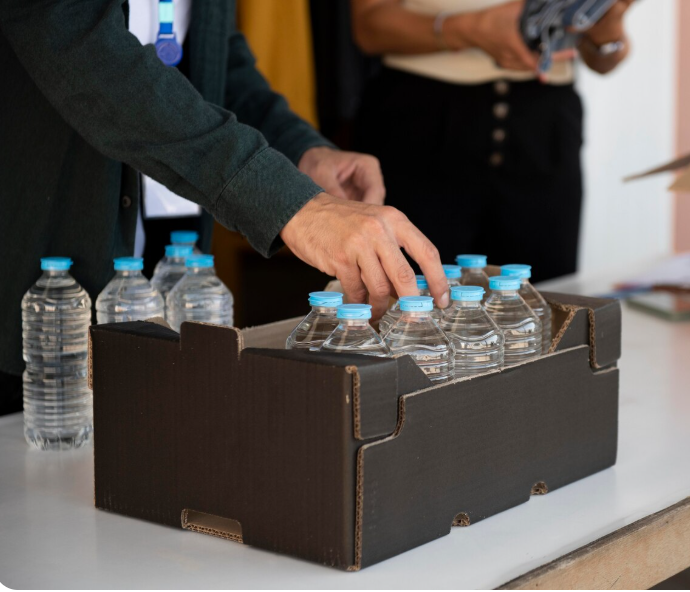
Strategic packaging methods can affect performance and uniformity. Boxes that are too large, packing processes that are untidy, and inconsistent materials on hand are all unnecessary delays that slow down dispatch. This results in slower processing times and higher shipping costs for businesses. Today’s advanced e-commerce businesses use packaging standardization procedures to simplify the process of preparing orders. This results in businesses taking longer to process orders and spending more on shipping. Many e-commerce companies are now using packaging to make order preparation easier and faster.
As brands look for more scalable and sustainable fulfillment solutions, many are investing in custom boxes for e-commerce to improve customer experience while reducing shipping inefficiencies. Thus, packaging optimization is not only an operational optimization, but also a long-term positioning strategy for the brand.
Lack of labor is still an issue in fulfillment networks.
As a result, many warehouses are not as productive during peak sales periods. In response to these concerns, organizations are putting more and more resources into retention programs and changes to the workplace that are geared to the comfort of employees. If e-commerce companies use machines to do some of the work, keep track of what products they have, pack the products in the right way, and use computers to guess what might happen, they can get the products to the customers a lot faster. Fulfillment is a part of e-commerce, and companies that can do fulfillment well are going to be successful e-commerce companies.
The companies that can change and adapt quickly are going to be the ones that do well in the future, especially when it comes to e-commerce companies that sell a lot of products. E-commerce companies need to be able to get the products to the customers without any problems, and that is what is going to make them successful.
Carrier Diversification and Last-Mile Strategies
The last part of getting a package to someone is really important. We call this Mile Delivery. It can be very complicated. This affects how happy customers are with the service they get. Carrier Diversification and Last-Mile Strategies are crucial in this case. This is because Complexities can make or break the customer experience.
The final operations in delivery to the customer tend to create the impression of the shopping experience. The logistical challenges are significant due to urban congestion, increasing fuel costs, and delivery failure attempts. This means that even the best processed orders can end up with unhappy customers on the last-mile delivery. To clear these hurdles, companies are increasingly collaborating with regional carriers and micro-fulfillment companies. In addition, route optimization software provides for more efficient delivery as it reduces delivery delays.
Conclusion
Order fulfillment has shifted from being purely the backend of e-commerce. Instead, it is now the core of every branded experience. If you experience delays in your shipment, receive an incorrect item, or miss the cut-off time to ship via a carrier, it is an opportunity for you to lose some trust in that brand, and in turn, have that customer leave you to find a different place to shop. On the other hand, when customers receive their products on time, in the correct packaging, and with an easy return policy, their confidence in your products increases, which will create repeat purchases in addition to word-of-mouth growth for your business.
The bottlenecks discussed in the article, including inefficiencies in pick and pack operations, labor shortages, reliance upon one carrier, and high volume returns, in addition to needing a more streamlined operation; they are not just isolated events that occur with one particular technical issue but are a result of not having the proper fulfillment operation scale with the volume of e-commerce orders placed today. To resolve these issues will take a layered approach, whereby using the right technology to deliver visibility to and through their order fulfillment operations, the right workforce practices and scheduling to continue delivering a high level of service through a time of high volume activity /order fulfillment, and lastly having network infrastructure designed to efficiently distribute order fulfillment operations anywhere.