
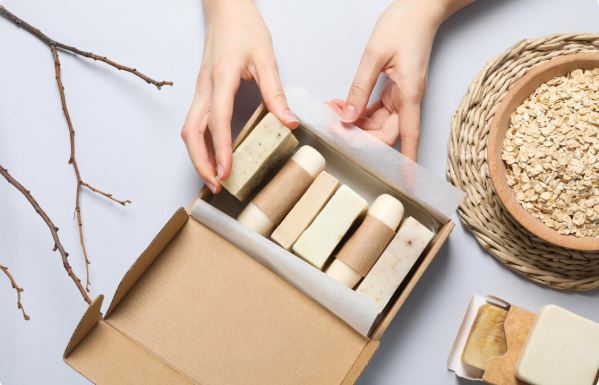
A paperboard carton can look recyclable on the outside while small design choices make recovery harder once it reaches a mill. Adhesive is one of those choices.
For packaging designers, converters, and brand teams working with fibre-based formats, the question isn’t simply whether a glue is marketed as sustainable. The more useful question is whether the complete package can be repulped, screened, and turned back into usable fibre without the adhesive creating unnecessary contamination or process problems.
Recyclability depends on what happens during repulping
Paper and paperboard recycling starts by breaking recovered packaging apart in water so usable fibres can be separated from coatings, inks, adhesives, films, and other non-fibre materials. From there, screening and cleaning equipment removes contaminants before the recovered pulp returns to papermaking.
An adhesive can affect several parts of this process. It may remain in large enough pieces to be screened out, break into smaller particles, disperse into process water, or stay attached to another packaging component. Each behaviour creates different consequences for the recycling system.
One particular concern is “stickies,” the tacky adhesive contaminants that can remain in recovered fibre. They may collect on screens, rolls, wires, felts, and other mill equipment or appear as defects in recycled paper. The Cepi paper-based packaging recyclability guidelines identify repulpability, fibre yield, screening rejects, and adhesive impurities among the factors that influence whether paper packaging works effectively in recycling mills.
That leads to an important distinction. An adhesive doesn’t necessarily need to disappear during recycling. In many cases, predictable removal is preferable to an adhesive breaking into particles that are difficult to separate.
The goal is therefore not “use glue that dissolves.” It is to select an adhesive system that performs its packaging function while remaining compatible with the expected recycling process.
Match the adhesive to the whole packaging structure
There isn’t one universally recyclable adhesive for every paper package. The right choice depends on the substrate, coating, application method, adhesive quantity, joint design, and conditions the package will encounter during use.
Consider a folding carton. The adhesive must keep side seams or other glued areas closed through converting, filling, transport, storage, and retail handling. An adhesive selected only because it appears environmentally preferable is not useful if seals begin opening on a high-speed packing line or after exposure to heat and humidity.
Conversely, specifying far more bond strength than the package requires can create unnecessary complications at end of life. The useful design target is enough adhesive, in the right location, to perform the job reliably without adding avoidable material.
This is why teams specifying folding carton adhesives should evaluate the adhesive as part of the carton construction rather than as an isolated chemical. Paperboard grade, print coatings, varnishes, glue-flap treatment, application temperature, line speed, storage environment, and recycling behaviour all matter.
A heavily coated carton, for example, may present a different repulping challenge from an uncoated kraft board even when both use the same adhesive. Changing only the glue does not automatically make the complete structure easier to recycle.
“Water-based” does not automatically mean “repulpable”
Water-based adhesives are widely used in paper and board converting, and they can be well suited to many recyclable packaging applications. But the presence of water in the formulation does not, by itself, establish recycling compatibility.
Once an adhesive dries, its behaviour can differ significantly from the liquid product applied on the packaging line. Some adhesive components may disperse during repulping. Others can remain as particles. Water-soluble material can also enter a mill’s process-water system rather than leaving cleanly with screened contaminants.
For that reason, labels such as “water-based,” “hot melt,” or “bio-based” shouldn’t replace application-specific evaluation.
Hot-melt adhesives illustrate the same point. A hot melt that stays relatively cohesive during repulping may form particles that screening equipment can remove. A different formulation or a very thin adhesive application may fragment differently. Pressure-sensitive adhesives require particular attention because their persistent tack can contribute to sticky contaminants if the package and recycling process are poorly matched.
Reactive adhesives introduce another consideration. Their resistance to heat, moisture, and chemicals can be useful where packaging requires demanding bond performance. Those same characteristics may mean the cured adhesive doesn’t soften or disperse readily during ordinary paper recycling conditions.
None of these categories should automatically be considered good or bad. Chemistry matters, but so do adhesive geometry, quantity, cured properties, substrate interaction, and the recycling route available for the final package.
Use less adhesive, but don’t compromise the package
Reducing adhesive use sounds straightforward until production reliability enters the discussion. Applying too little can cause carton opening, case failures, rejected packs, downtime, or damaged goods.
The better approach is controlled application.
Instead of treating sustainability as a reason to weaken the bond, converters can examine whether glue patterns are wider or heavier than necessary. Equipment condition matters here. Worn nozzles, inconsistent pressure, incorrect viscosity, poor temperature control, and inaccurate application settings can all increase adhesive consumption without improving the final bond.
Package geometry is equally important. A well-designed glue flap provides enough bonding area for reliable closure without requiring excessive adhesive coverage. Surface treatments also deserve attention because coatings, inks, and varnishes can change adhesion. If the adhesive has difficulty wetting the surface, simply adding more glue may mask a design or material-compatibility problem rather than solve it.
This creates a practical hierarchy for adhesive reduction: first design a bond that works, then control application accurately, and finally determine how much adhesive can be removed while maintaining the required performance margin.
Reducing material only counts as progress when the package still protects the product.
Test the finished pack, not just the adhesive specification
A supplier data sheet can help narrow adhesive choices, but packaging recyclability belongs to the finished construction.
That distinction becomes important when several materials interact. Imagine two cartons using the same board and adhesive. One has a small glue seam on untreated paperboard. The second has broad adhesive coverage over a coated surface and includes an additional laminated window. Their recycling behaviour may differ substantially even though the adhesive SKU is identical.
For significant packaging changes, teams should therefore evaluate representative finished samples. Testing should reflect the market where the package will actually be collected and recycled, since mill technology, collection systems, and recyclability assessment methods can vary.
Useful questions include:
- Does the fibre structure break apart effectively during repulping?
- How much usable fibre can be recovered?
- Does the adhesive remain in particles that screening can remove?
- Does it create tacky residues or sheet defects?
- Are coatings, labels, windows, or other components changing the result?
- Can adhesive quantity or placement be reduced without affecting package performance?
Testing also helps prevent an increasingly common sustainability mistake: making claims about an entire package based on one component. A repulping-compatible adhesive cannot compensate for every coating, laminate, or non-paper element used elsewhere in the design.
Bring adhesive decisions into packaging development earlier
Adhesive selection often happens late in package development, after the board grade, graphics, coatings, and structural design are already fixed. By then, the adhesive supplier or converter may be asked to make a predetermined construction work.
That limits the opportunity to design for recycling.
A better process brings packaging engineers, converters, adhesive specialists, and sustainability teams together before the specification is locked. Early discussion can identify conflicts between production requirements and end-of-life goals while there is still time to change the structure.
For example, a proposed coating may require a more aggressive adhesive than untreated board. Changing the coating location around the glue flap could potentially simplify the bonding requirement. A package may also be using a continuous glue pattern where carefully placed beads provide sufficient performance with less adhesive.
These aren’t dramatic redesigns. They are small engineering choices that become easier and cheaper when considered before tooling, artwork, and line settings are finalized.
Sustainable packaging requires compatibility, not slogans
Adhesive may account for only a small portion of a fibre-based package, but its behaviour can influence whether recovered fibres separate cleanly and return to productive use.
The strongest approach is to avoid selecting glue by environmental label alone. Look at the complete packaging structure, the adhesive’s behaviour during repulping and screening, the minimum amount required for reliable performance, and the recycling system the package is likely to enter.
A carton still has to survive manufacturing, distribution, storage, and use. Sustainable adhesive design is about meeting those demands while giving the fibre underneath the best practical chance of becoming packaging again.


